Working smoke alarms can provide early warning of a fire. Follow the manufacturer’s placement, testing, maintenance, and replacement instructions, and ask your local fire department or a qualified installer about suitable devices for your home.
Fire-safety guidance emphasizes the importance of working smoke alarms for early warning. Alarm placement, testing, maintenance, and prompt response affect their performance; alarms do not prevent every fire or loss. Below, we explain how these devices work and ways to keep them in good operational condition.
How does a smoke detector work?
Smoke alarms commonly use ionization or photoelectric sensing technology, while heat detectors are a different type of fire detection device:
Ionization
Ionization smoke alarms use a sensing chamber to detect smoke. Device features and installation instructions vary by model. Ask your local fire authority about suitable alarms and follow the manufacturer’s instructions.
Heat
Heat alarms respond to temperature rather than smoke. Ask your local fire authority about suitable uses, such as garages, and follow manufacturer instructions. Heat alarms are not substitutes for required smoke alarms.
Photoelectric
Photoelectric smoke alarms use a light-based sensor to detect smoke. Review the manufacturer’s specifications, placement guidance, and maintenance instructions for your model, and ask your local fire authority about suitable alarms.
Some smoke alarms combine ionization and photoelectric sensing. Follow the manufacturer’s instructions and review U.S. Fire Administration guidance with your local fire authority when choosing devices and planning installation.
5 essential tips for maintaining your smoke detectors
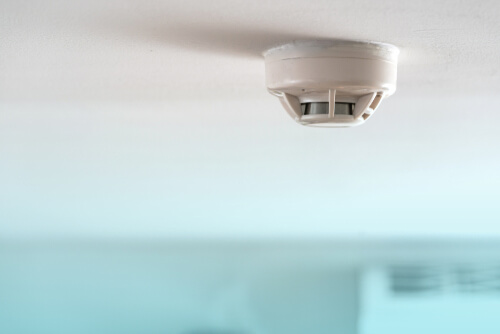
Learn the warning signals for each alarm and follow its testing and maintenance instructions. Do not disable an alarm because of nuisance signals; ask the manufacturer or a qualified professional about persistent problems.
- Regular testing and maintenance
Smoke alarms provide early warning. Test each alarm at least monthly using its test button and follow the manufacturer’s instructions; a test does not guarantee detection of every fire. - Avoid tampering
No matter how irritating false alarms can be, tampering with smoke detectors can be life-threatening. Hotels often highlight severe penalties for tampering with detectors to emphasize their importance. - Battery replacement
Regular battery replacement is, of course, hugely important, even if your detector is hardwired with a battery backup. Replace removable batteries according to the manufacturer’s instructions and promptly when a low-battery warning sounds. For sealed-battery alarms, follow the manufacturer’s instructions and replace the complete alarm when required; do not assume a sealed battery is rechargeable. - Timely replacement
Check the manufacture date and replacement instructions. Replace smoke alarms when they are 10 years old, or earlier when required by the manufacturer or if an alarm fails testing. Replacement does not guarantee protection against every fire. - Cleaning and maintenance
Follow the manufacturer’s cleaning method and schedule. Cleaning may reduce dust-related interference, but does not establish that an alarm will detect every fire.
Compare available home insurance quotes in Greenacres
Working smoke alarms are one part of home fire safety. Follow manufacturer instructions and your local fire authority’s guidance. Review home insurance in Greenacres policy options, limits, deductibles, exclusions, and conditions with an independent Florida insurance agent. Direct claims and loss questions to the issuing insurer.
Home Insurance Florida is an independent Florida insurance agent working with multiple carriers. We help homeowners compare available options, subject to carrier eligibility, underwriting, and policy terms.
We can help you compare available homeowners insurance options, including premiums, coverage limits, and exclusions. An independent Florida insurance agent can help you review available policy options, subject to insurer eligibility requirements and policy terms. Contact us, and ask an independent Florida insurance agent about options available for your Greenacres home. Carrier eligibility, underwriting, and policy terms apply.