How to Prepare Your Home for Hurricane Season in Lake Worth Beach
As beautiful as Lake Worth Beach is, it can also be the backdrop to the kind of tropical storms that would make a Hollywood special effects team jealous. With hurricane season officially lasting from June 1 to November 30, that’s 6 months of hurricane roulette that Lake Worth Beach people have to cope with.
In this article, we’re going to look at ways you can stack the hurricane odds in your favor, protect your family, home, and belongings—and reduce the likelihood of filing a costly insurance claim.
General advice
Whether or not a hurricane is heading your way right now, here are some tips to make sure you’re ready for it, if and when it decides to drop by.
Review Your Insurance Coverage
Review your policy’s wind and hurricane provisions, applicable deductibles, exclusions, and limits with your agent. A percentage hurricane deductible is generally based on the policy’s dwelling or structure limit. For illustration, 5% of a $500,000 dwelling limit is a $25,000 deductible. That figure is not necessarily your total out-of-pocket cost; uncovered damage, policy limits, and other terms may affect what you pay.
Review coverage well before a storm and ask specifically about flood insurance and any separate policy needed for your property. National Flood Insurance Program policies generally have a 30-day waiting period, with exceptions; private flood policy waiting periods and effective dates vary. Confirm when coverage actually begins and whether storm-related binding restrictions affect an application or requested change. Compare limits, deductibles, exclusions, and premiums rather than assuming a quote guarantees suitable coverage or immediate protection.
Document your home possessions
Take photos and videos of your items, noting their condition and value. Keep receipts and important documents in a waterproof container as this documentation will be essential when filing a claim.
Buy a generator (or if you already have one, test it!)
Portable generators can provide backup power, but misuse can cause fatal carbon monoxide poisoning. Use them outdoors at least 20 feet from the home, with exhaust directed away from buildings and their openings; never run them in a home, garage, or other enclosed space. Follow manufacturer instructions, maintain working carbon monoxide alarms, and follow fuel-storage and refueling safety directions. Arrange any connection to home wiring through a qualified electrician.
Secure storm shutters
Discuss suitable storm shutters or other approved opening protection with a qualified installer. Products, fasteners, installation methods, and any temporary panels must suit the property and applicable local requirements. A generic plywood thickness is not enough to establish suitable protection for every opening. Complete preparations safely before hazardous weather arrives; no opening-protection system guarantees that damage will not occur.
Check your roof
Have an appropriately qualified roofing or structural professional evaluate roof attachments and any proposed retrofit. Connections cannot be ranked or upgraded reliably from a generic description alone; installation, the surrounding structure, and applicable requirements matter. Ask an authorized wind mitigation inspector about documentation and your agent about possible credits. A retrofit does not guarantee storm protection, insurance eligibility, or a lower premium.
Create an evacuation plan
Develop a detailed evacuation plan, including routes, destinations, and a list of items to bring. Discuss the plan with family members and make sure everyone knows what to do. If you have pets, don’t forget to include them in the plan too.
Stock up on hurricane essentials
In the event of a hurricane, bottled water, non-perishable food, flashlights, batteries, and first aid kits are going to be your new best friends. Purchase these items well in advance to avoid any last-minute rush.
What to do if a hurricane is on the way
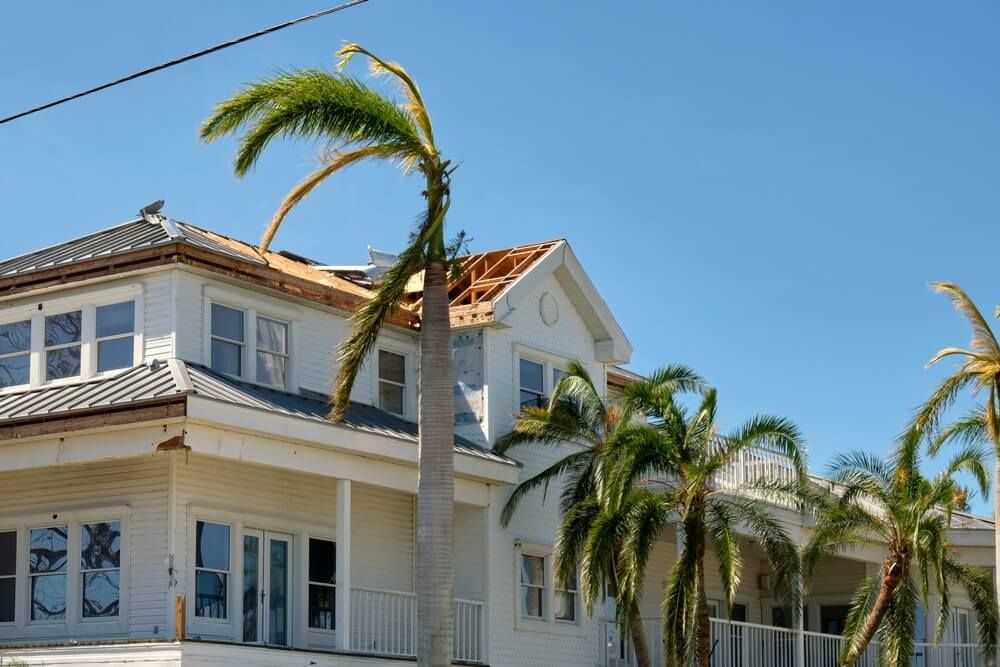
If a hurricane is predicted to hit your community soon, these are the steps you should follow in the days and hours beforehand.
● Locate water, electricity, and gas shutoffs
Identify utility shutoffs in advance. Follow utility-provider and emergency-management instructions; do not shut off natural gas unless instructed.
● Secure windows, doors, and garage doors
Install your storm shutters or plywood coverings over windows and doors to protect against wind and flying debris.
● Trim trees and shrubs
Well before a storm, have hazardous branches evaluated and trimmed by a qualified professional. Trimming does not guarantee prevention of wind damage.
● Anchor Outdoor Objects
Move lighter outdoor items indoors and secure heavier objects to prevent them from becoming projectiles during the storm.
● Adjust your freezer and refrigerator
Perhaps not quite as crucial as the others, but setting your freezer and refrigerator to the coldest settings helps keep your food fresh longer if the power goes out.
Review Home Insurance in Lake Worth Beach
HomeInsuranceFlorida.com helps Lake Worth Beach homeowners explore homeowners insurance through an independent Florida insurance agent working with multiple carriers. Review available limits, hurricane deductibles, exclusions, and eligibility requirements before choosing a policy. Contact us to compare available options. Coverage, pricing, and availability depend on carrier underwriting, property eligibility, and policy terms; a quote does not bind coverage.